Books by Philip Ball

(Toda) A Ciência em Três Grandes Perguntas

(Toda) A Ciência em Três Grandes Perguntas by Philip Ball

Science (all of it) in only three questions

(Portuguese edition)
A book for children
Illustrated by Bernardo P. Carvalho

What’s Science really about?
Having all the answers?
Memorising a whole load of information?
Discovering stuff in order to solve specific problems?

Philip Ball, the author of this book, believes that Science is something altogether different, and that a good scientist is not necessarily someone who has all the answers, but someone who knows how to ask the right questions, moving between different fields and being curious, just for the sake of it.

BUY ON PLANETA TANGERINA

BUY ON WOOK

ALCHEMY: An Illustrated History of Elixirs, Experiments, and the Birth of Modern Science

Hardcover of the book Alchemy An Illustrated History of Elixirs, Experiments, and the Birth of Modern Science
Alchemy hardcover 2025

Alchemy: An Illustrated History of Elixirs, Experiments, and the Birth of Modern Science by Philip Ball

The craft of alchemy has intrigued and mystified people since antiquity. Many early cultures are known to have experimented with chemical transformations: from dyes, glazes, and cosmetics in Bronze Age Egypt to life-extending elixirs pursued by scholars in ancient China and India. Many have also attempted to transform lead, mercury, and other metals, into gold – and some claimed to have succeeded.

BUY ON AMAZON

HOW LIFE WORKS: A User’s Guide to the New Biology

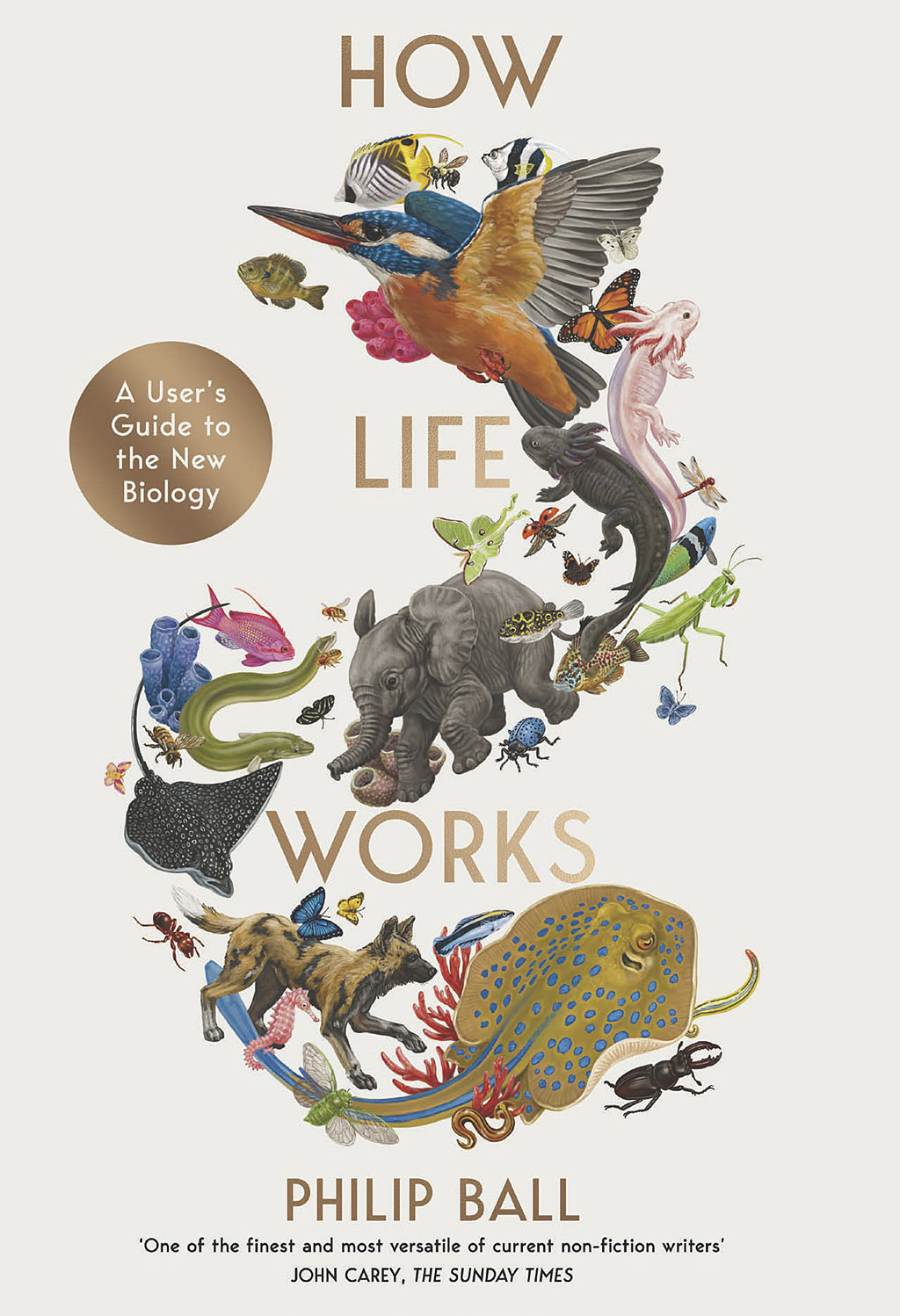
UK book cover for How Life Works, A User's Guide to the New Biology
How Life Works by Philip Ball (UK)
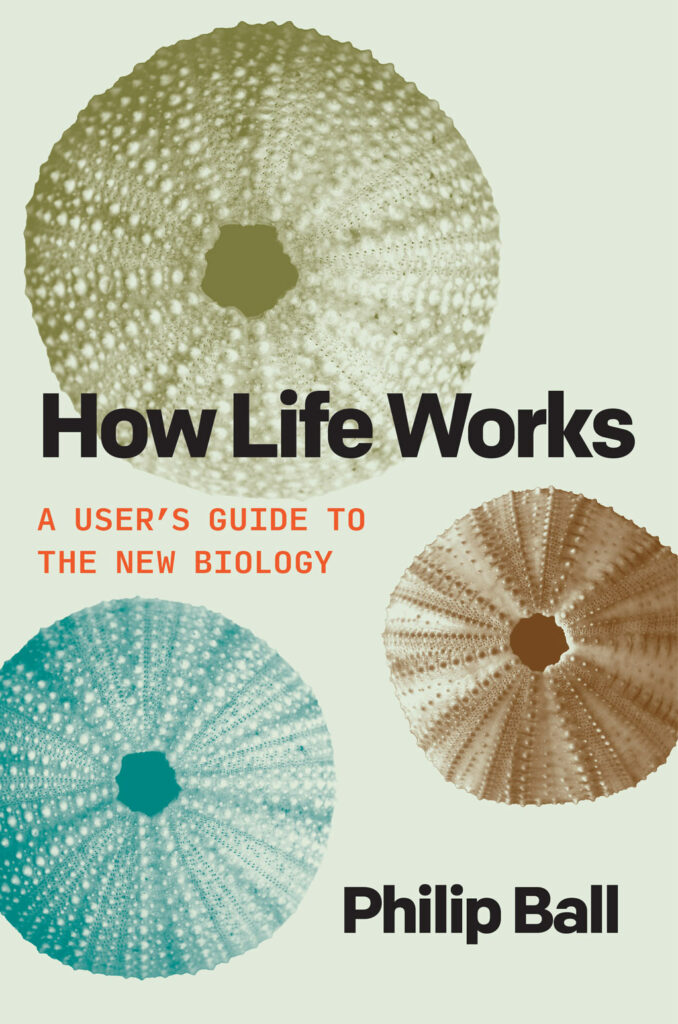
US book cover for How Life Works, A User's Guide to the New Biology
How Life Works by Philip Ball (US)

How Life Works: A User’s Guide to the New Biology by Philip Ball

Biology is undergoing a quiet but profound transformation. Several aspects of the standard picture of how life works—the idea of the genome as a blueprint, of genes as instructions for building an organism, of proteins as precisely tailored molecular machines, of cells as entities with fixed identities, and more—have been exposed as incomplete, misleading, or wrong.

WEBSITE – HOW LIFE WORKS

BUY ON AMAZON Hardback
BUY ON AMAZON Now in Paperback

BEAUTIFUL EXPERIMENTS: An Illustrated History of Experimental Science

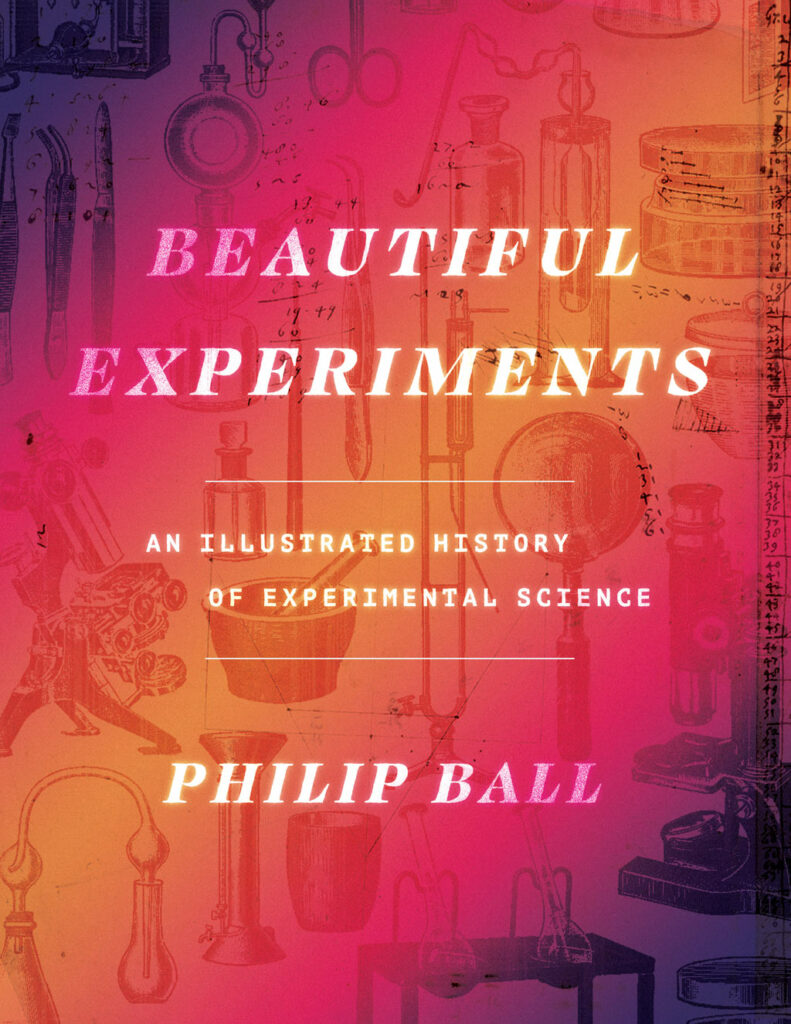
Book cover image of Beautiful Experiments: An Illustrated History of Experimental ScienceBeautiful Experiments: An Illustrated History of Experimental Science by Philip Ball

Featuring two hundred color plates, this history of the craft of scientific inquiry is as exquisite as the experiments it documents.

This illustrated history of experimental science is more than just a celebration of the ingenuity that scientists and natural philosophers have used throughout the ages to study—and to change—the world. Here we see in intricate detail experiments that have, in some way or another, exhibited elegance and beauty: in their design, their conception, and their execution. Celebrated science writer Philip Ball invites readers to marvel at and admire the craftsmanship of scientific instruments and apparatus on display, from the earliest microscopes to the giant particle colliders of today.

BUY ON AMAZONPublished in Fall/Autumn 2023

THE MODERN MYTHS: Adventures in the Machinery of the Popular Imagination

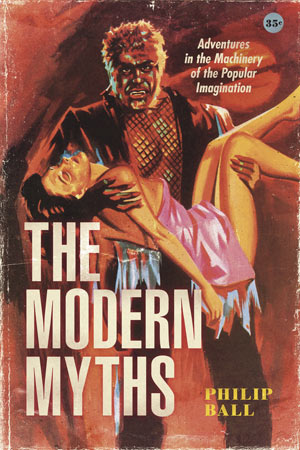
Book cover image of The Modern Myths: Adventures in the Machinery of the Popular ImaginationThe Modern Myths: Adventures in the Machinery of the Popular Imagination by Philip Ball

Myths are usually seen as stories from the depths of time—fun and fantastical, but no longer believed by anyone. Yet as Philip Ball shows, we are still writing them—and still living them—today. From Robinson Crusoe and Frankenstein to Batman, many stories written in the past few centuries are commonly, perhaps glibly, called “modern myths.” But Ball argues that we should take that idea seriously. Our stories of Dracula, Dr. Jekyll and Mr. Hyde, and Sherlock Holmes are doing the kind of cultural work that the ancient myths once did.

Through the medium of narratives that all of us know in their basic outline and which have no clear moral or resolution, these modern myths explore some of our deepest fears, dreams, and anxieties.

Winner of the Mythopoeic Society’s 2022 Mythopoeic Scholarship Award in Myth and Fantasy Studies


BUY ON AMAZON

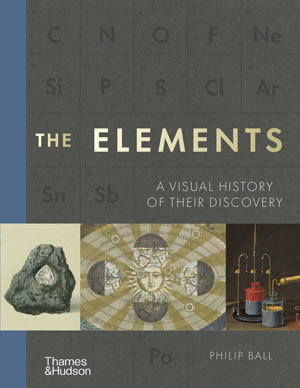
THE ELEMENTS: A Visual History of Their Discovery

Book Cover for The Elements by Philip BallThe Elements: A Visual History of Their Discovery by Philip Ball

This Elements offers a largely chronological illustrated guide to how the chemical elements were discovered over the past three millennia. It provides a view not just of how we came to understand what everything is made of but also of how chemistry developed from a trial-and-error craft of making and transforming substances into a rational modern science that provides us with new materials, drugs, and much else.

While other books have described the properties of the chemical elements and often delved into their histories, none has done so in this highly visual manner. The pictorial material for this subject is very rich, including some gorgeous alchemical documents as well as portraits, colour charts, woodcuts of mining, artefacts such as John Dalton’s wooden balls, advertisements (for example, for radium ‘cures’) and postage stamps.

BUY ON AMAZON

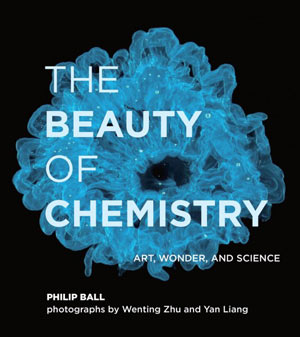
THE BEAUTY OF CHEMISTRY: Art, Wonder, and Science

The Beauty of Chemistry: Art, Wonder, and Science by Philip Ball. Available from AmazonThe Beauty of Chemistry: Art, Wonder, and Science by Philip Ball

Chemistry is not just about microscopic atoms doing inscrutable things; it is the process that makes flowers and galaxies. We rely on it for bread-baking, vegetable-growing, and producing the materials of daily life. In stunning images and illuminating text, this book captures chemistry as it unfolds. Using such techniques as microphotography, time-lapse photography, and infrared thermal imaging, The Beauty of Chemistry shows us how chemistry underpins the formation of snowflakes, the science of champagne, the colors of flowers, and other wonders of nature and technology. We see the marvelous configurations of chemical gardens; the amazing transformations of evaporation, distillation, and precipitation; heat made visible; and more.

BUY ON AMAZON

THE BOOK OF MINDS: How to Understand Ourselves and Other Beings, from Animals to AI to Aliens

UK cover of The Book of Minds by Philip BallThe Book of Minds: How to understand ourselves and other beings, from animals to AI to aliens by Philip Ball

Understanding the human mind and how it relates to the world that we experience has challenged philosophers for centuries. How then do we even begin to think about ‘minds’ that are not human?

In recent decades, the mind – both human and otherwise – has been explored by scientists in fields ranging from zoology to astrobiology, computer science to neuroscience. Taking a uniquely broad view of minds and where they might be found – including in plants, aliens, and God – The Book of Minds pulls these multidisciplinary pieces together. In so doing, it offers for the first time a unified way of thinking about what minds are and what they can do, arguing that in order to understand our own minds and imagine those of others, we need to move on from considering the human mind as a standard against which all others should be measured.

BUY ON AMAZON

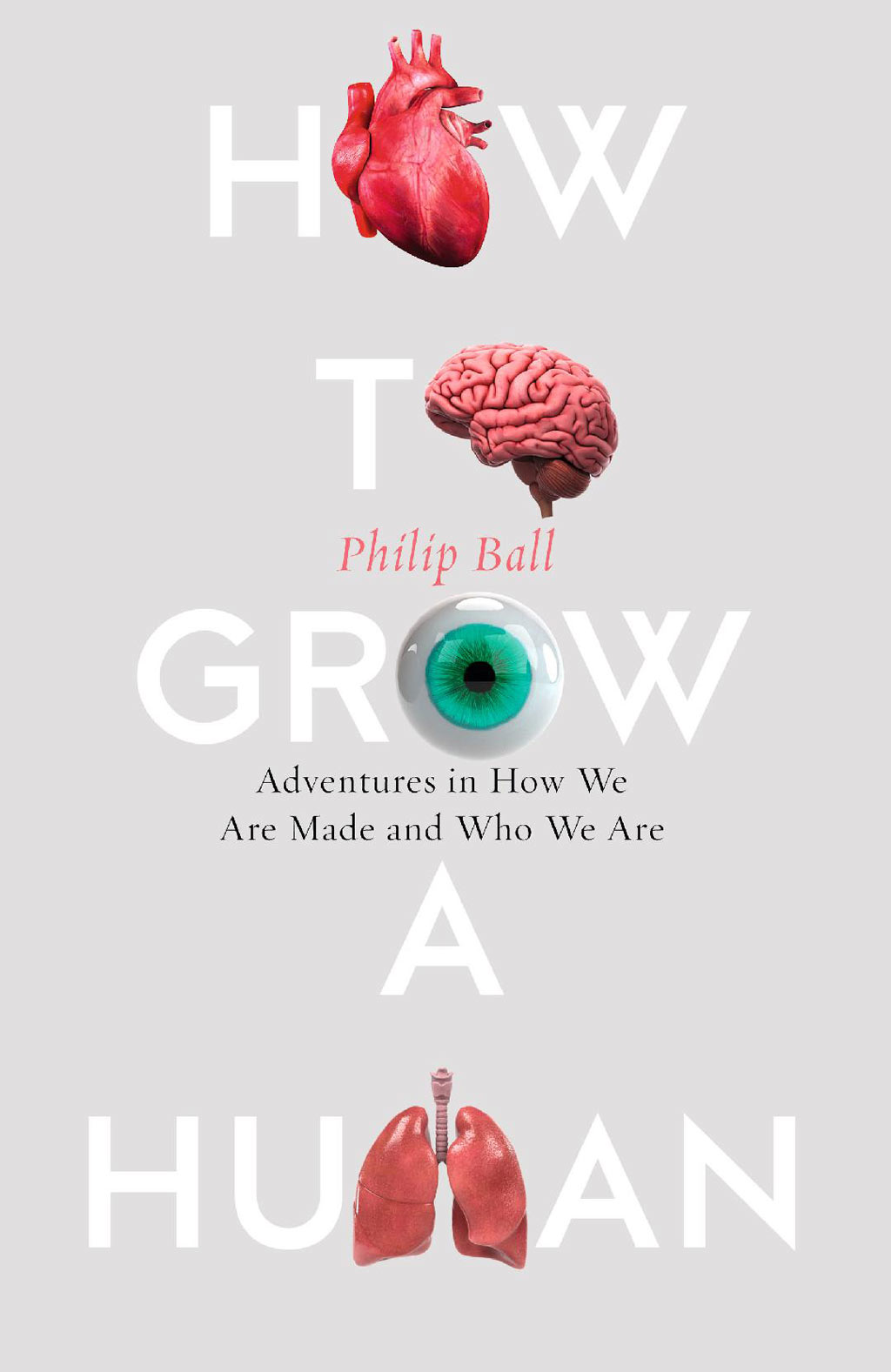
HOW TO GROW A HUMAN: Adventures in Who We Are and How We Are Made

Front cover of How To Grow A Human: Adventures in Who We Are and How We Are MadeHow To Grow A Human: Adventures in Who We Are and How We Are Made by Philip Ball

On a swelteringly hot day during the summer of 2017, Philip Ball had a piece of his arm removed and turned into a rudimentary miniature brain. This book is his attempt to make sense of that strange experience and to understand the implications of our new-found power to transform cells. If any type of cell in your body can become any other, is it possible to grow not just a mini-brain but an entire human being in a lab, from a scrap of skin? Ball recounts the macabre history of human tissue culture, and scrutinizes the narratives that frame our understanding of our cells and our genesis. At the cellular level, the unlikely process from which a clump of cells becomes a human offers much to marvel at.

BUY ON AMAZON

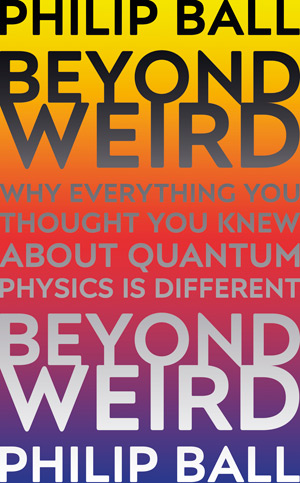
BEYOND WEIRD: Why Everything You Thought You Knew About Quantum Physics Is Different

Book Cover for BEYOND WEIRD: Why Everything You Thought You Knew About Quantum Physics Is DifferentWhy Everything You Thought You Knew About Quantum Physics Is Different by Philip Ball

I think I can safely say that nobody understands quantum mechanics.”

Richard Feynman wrote this in 1965 – the year he was awarded the Nobel prize in physics for his work on quantum mechanics.

Quantum physics has come to be regarded as one of the most obscure and impenetrable subjects in all of science. But when Feynman said he didn’t understand quantum mechanics, he didn’t mean that he couldn’t do it – he meant that’s all he could do. He didn’t understand what the equations were saying: what quantum mechanics tells us about reality.

The enigma of quantum mechanics hasn’t lessened, but over the past decade or so it has come into sharper focus, making its old clichés less useful. We now realise that quantum mechanics is less a theory about particles and waves, uncertainty and fuzziness, than a theory about information: about what can be known and how. This has far more disturbing implications than is suggested by our bad habit of describing the quantum world as ‘things behaving weirdly’. It calls into question the meanings and limits of space and time, cause and effect, and knowledge itself.

BUY ON AMAZON

Scroll to Top